By Tadeo Andi
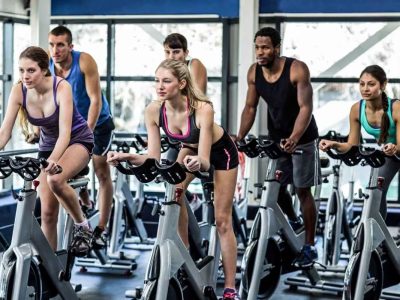
The intersection of high business travel frequency and genuine fitness commitment creates a training challenge that most formats address inadequately. Travelling professionals need something that delivers meaningful training returns in compressed time windows, requires no programme continuity between sessions, accommodates variable fitness states from travel fatigue, and is accessible in a destination-appropriate form without elaborate pre-trip logistics. hiit classes singapore facilities offer meet all of these requirements simultaneously in ways that make the format the rational fitness choice for Singapore’s most mobile professional population.
The Travel Fitness Problem and Why HIIT Solves It
High-mobility Singapore professionals face a fitness problem with three simultaneous constraints: time scarcity, facility uncertainty, and variable physiological readiness from travel disruption. Most fitness formats address one or two of these constraints while failing on the third. HIIT addresses all three through characteristics that are structural to the format rather than implementation-dependent.
Time Constraint Resolution
A thirty to forty-five minute HIIT class delivers cardiovascular and metabolic training stimulus that would require sixty to ninety minutes to achieve through moderate-intensity training. For a professional in Singapore for forty-eight hours with one realistic training window of forty-five minutes between an afternoon meeting and an evening dinner, a HIIT class provides a complete training stimulus within the available time. A moderate-intensity cardiovascular session of equivalent quality cannot fit the same window.
Facility Independence
HIIT requires minimal equipment relative to the training stimulus it produces. Bodyweight HIIT formats require only floor space. Dumbbell-supported HIIT requires the minimal equipment that almost any hotel gym provides. This minimal equipment requirement means that HIIT can be executed in the hotel room, the hotel gym, or a drop-in class at a Singapore premium facility with equivalent physiological outcomes across all three environments.
Variable Readiness Accommodation
HIIT’s effort self-regulation allows travelling professionals to adjust intensity based on their current physiological state without changing the format or the session structure. A professional arriving in Singapore after a twelve-hour flight can attend the same class format at sixty percent of their peak effort that they attend at ninety percent on a well-recovered day, adjusting within the class structure to their current capacity without requiring a different format.
True Fitness Singapore’s HIIT class scheduling and drop-in access infrastructure accommodates the specific access patterns of Singapore’s high-mobility professional population. True Fitness Singapore provides the class quality and logistical accessibility that makes HIIT a reliable training tool for Singapore’s most frequently travelling professionals.
FAQs
Q. – Should I reduce HIIT intensity on days when I am significantly jet-lagged during Singapore visits?
Ans. – Yes. Jet lag impairs both physical performance capacity and the recovery resources available after training, making maximum-intensity HIIT during the first day or two of significant time zone adjustment counterproductive. Attending at sixty to seventy percent of usual intensity during the adjustment period maintains the training habit without accumulating recovery debt that compounds the jet lag disruption.
Q. – Is a thirty-minute HIIT session sufficient to justify the logistics of accessing a Singapore gym during a short visit?
Ans. – For professionals whose training priority is cardiovascular maintenance and stress management, a thirty-minute genuine HIIT session provides the equivalent cardiovascular stimulus of a sixty-minute moderate session and meaningful catecholamine-driven stress relief. The logistical investment of twenty to thirty minutes of travel and changing time for a total gym visit of sixty to seventy-five minutes is justified by the physiological and psychological returns for fitness-committed travellers.
Q. – How do I maintain HIIT-level fitness during Singapore visits when my schedule allows no gym access at all?
Ans. – Hotel room HIIT using bodyweight exercises provides a genuine high-intensity training stimulus without any equipment or facility requirement. A twenty to thirty minute session alternating between burpees, jump squats, push-up variations, and core work at near-maximal effort produces cardiovascular and metabolic stimulus that maintains fitness adequately during periods of complete gym access unavailability.
Q. – Are Singapore HIIT class formats standardised enough across facilities for drop-in participants to navigate confidently?
Ans. – HIIT formats vary more than standardised programmes like Les Mills between facilities, but the core structure of work intervals followed by rest periods is universal enough that experienced HIIT participants navigate any facility’s format confidently within the first few minutes. Arriving a few minutes early to ask the instructor about the session structure removes any remaining uncertainty.
Q. – How does HIIT class attendance during Singapore visits compare to my usual training outcomes at home?
Ans. – Travel-context HIIT typically produces somewhat lower performance than home training due to the combined effects of travel fatigue, unfamiliar environment, and potentially different class format and instructor quality. Treating Singapore visit HIIT sessions as maintenance training rather than performance development sessions sets appropriate expectations and allows productive intensity management given actual physiological capacity.