 By Tadeo Andi
The global workforce has experienced a permanent structural shift. Remote work, once treated as a temporary accommodation or a niche perk, has transformed into a standard employment model for millions of knowledge workers across the globe. This evolution gave rise to the digital nomad: a professional who leverages wireless technology to work from anywhere while moving between cities, regions, or countries.
For decades, the hospitality industry relied on two distinct guest profiles: the short-term vacationer seeking leisure, and the corporate traveler staying for a couple of nights during a business conference. Digital nomads do not fit into either traditional bucket. They stay for weeks or months at a time, demand pristine digital infrastructure, and expect their accommodations to function as both a comfortable living space and a high-performance office. In response, hotels worldwide are fundamentally redesigning their physical environments, operating models, technology stacks, and community offerings to capture this high-value market segment.
The Evolution of the Hospitality Landscape
The transition toward remote work has challenged long-standing assumptions about hotel occupancy and revenue management. Traditionally, hotel revenue managers wrestled with midweek slumps and seasonal lulls. Digital nomads have flipped this dynamic by filling room nights during off-peak periods and extending average lengths of stay from two days to several weeks.
To capture this growing demographic, hoteliers have realized that standard hotel amenities are no longer enough. A comfortable bed, a small coffee maker, and basic wireless internet were adequate for a weekend tourist, but they quickly frustrate a software engineer or marketing director working forty hours a week. Modern hospitality operators are moving away from treating rooms strictly as places to sleep, shifting instead toward hybrid living spaces designed around daily productivity and routine.
Redesigning Physical Spaces for Productivity
The most visible transformation in nomad-friendly hotels occurs in physical room design. Traditional hotel rooms often feature decorative furniture that consumes floor space without offering practical utility, such as oversized armoires or small vanity tables paired with uncomfortable chairs. Hoteliers are systematically removing these non-functional items in favor of intentional, work-friendly layouts.
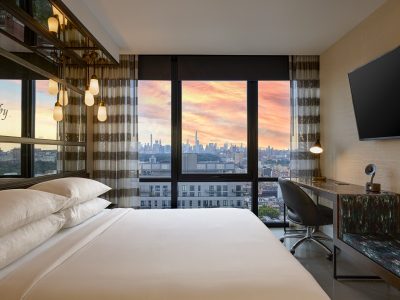
In-room workstations now feature spacious desks, adjustable task lighting, and ergonomic seating that supports long hours of focused computer work. Outlets and USB ports are strategically placed at desk height to eliminate the frustration of crawling under furniture to charge devices. Soundproofing has also become a major renovation priority. Double-paned windows, acoustic wall panels, and insulated doors ensure that guests can host video conferences or focus on deep tasks without background noise from hallways or city streets.
Public Areas Transformed into Hybrid Co-Working Spaces
The transformation extends far beyond individual guest rooms. Hotel lobbies, historically designed as transient waiting areas with decorative seating, are being re-engineered into active co-working environments.
-
Communal Work Tables: Large wood or stone tables equipped with built-in power outlets and task lamps encourage collaborative work and ambient social interaction.
-
Soundproof Phone Booths: Modernized phone pods allow guests to take private client calls or team meetings without disturbing others in the lobby.
-
Zoned Lighting and Acoustics: Lobbies are divided into distinct zones using acoustic dividers and directional lighting, creating silent focus areas on one side and energetic social lounges on the other.
-
All-Day Cafe Service: On-site coffee shops and bars offer seating setups designed specifically for laptop users, complete with accessible power stations and steady background ambient volume.
Enterprise-Grade Technology Upgrades
For a digital nomad, a reliable internet connection is not an added luxury; it is an absolute requirement for earning a living. Drops in Wi-Fi connectivity or slow upload speeds can result in missed deadlines, dropped client calls, and immediate negative online reviews. Consequently, hotels catering to remote workers are investing heavily in commercial enterprise-grade network infrastructure.
Hotels are replacing residential-grade networks with high-speed fiber-optic connections capable of delivering symmetrical upload and download speeds exceeding one hundred megabits per second. Many properties now implement dedicated bandwidth allocation per room, preventing a single heavy user from slowing down the entire network. Redundant internet lines from separate service providers are increasingly common, ensuring that if one network fails, a secondary line automatically takes over without interrupting active connections.
Beyond connectivity, smart hotel technologies streamline daily work routines. Wireless screen-casting systems allow guests to use large in-room televisions as secondary monitors for coding, video editing, or presentations. Keyless mobile entry via smartphone applications eliminates the risk of demagnetized keycards disrupting a busy workday.
Flexible Booking Models and Extended Stay Packages
Traditional hotel pricing models rely on nightly rates that become prohibitively expensive for travelers staying thirty days or longer. To compete with short-term residential rentals and dedicated co-living spaces, hotel groups are introducing flexible, tiered pricing structures tailored for extended stays.
Discounts starting at seven, fourteen, or thirty nights make long-term stays financially viable for nomads. Some brand portfolios have launched subscription programs and pass systems, allowing members to split a monthly rate across multiple locations within the same hotel chain. This enables guests to work from a coastal property for two weeks and then move to a mountain town for the remainder of the month without dealing with multiple booking processes or lease agreements.
Furthermore, properties are rethinking check-in and check-out times. Rigid check-out schedules at eleven in the morning often conflict with international work schedules or late afternoon video calls. Flexible, 24-hour check-in policies allow remote workers to align their room access with their actual travel and work schedules.
Fostering Community and Networking Opportunities
One of the greatest challenges reported by long-term remote workers is social isolation. Moving between unfamiliar locations can make building meaningful connections difficult. Hotels that successfully attract digital nomads recognize this human need and act as local community hubs rather than neutral lodgings.
Properties are hiring community managers responsible for organizing social and professional events. These range from informal evening mixers and local craft beer tastings to structured panel discussions, skill-sharing workshops, and group fitness sessions. By facilitating natural interactions among guests, hotels transform transient visitors into repeat community members who return year after year.
Lifestyle Integration and Wellness Amenities
Digital nomads maintain their everyday lives on the road, which means their health and wellness needs mirror those of settled residents. Hotels adapting to this lifestyle are expanding their wellness services well beyond a basic room with a treadmill.
-
In-Room Kitchenettes: Modern long-stay suites feature compact kitchens with induction cooktops, fridges, micro-appliances, and cookware, allowing guests to prepare healthy meals instead of relying constantly on dining out.
-
On-Site Laundry Facilities: Self-service laundry rooms equipped with modern washers and dryers are essential for travelers traveling light with minimal luggage.
-
Expanded Fitness and Wellness: Hoteliers are adding yoga studios, recovery zones, and partnerships with local fitness clubs to help guests maintain physical health routines.
-
Sleep Optimization: Recognizing the impact of rest on cognitive performance, rooms are equipped with blackout shades, white noise machines, and high-performance mattresses to support healthy sleep cycles across changing time zones.
Frequently Asked Questions
How do hotels ensure network security for digital nomads handling sensitive corporate data?
Nomad-friendly hotels implement enterprise-grade network security protocols, including segmented virtual local area networks that isolate each guest’s device from others on the same network. Many properties also offer secure virtual private network compatibility and password-protected Wi-Fi access rather than open public networks.
What is the difference between a traditional extended-stay hotel and a nomad-centric property?
Traditional extended-stay hotels historically focused on corporate relocations or construction crews, prioritizing basic functional utilities over design and atmosphere. Nomad-centric properties emphasize community, vibrant co-working spaces, aesthetic interior design, lifestyle amenities, and social programming alongside work infrastructure.
How are smaller boutique hotels competing with major chains for remote workers?
Boutique hotels compete by offering highly personalized hospitality, distinct local character, and intimate community settings. While major chains leverage standardized technology, boutique properties often partner with local coffee shops, craft breweries, and co-working spaces to provide authentic, neighborhood-focused experiences.
What role do digital nomad visas play in hotel occupancy strategies?
Dozens of countries now offer specialized visas allowing remote workers to reside locally for six months to two years. Hotels align their extended-stay packages and marketing campaigns with these visa programs, targeting nomads who plan to establish a mid-term base in a specific country.
How do hotels handle time zone differences for guests working international hours?
Hotels cater to global schedules by offering round-the-clock access to co-working areas, silent work zones for late-night calls, twenty-four-hour grab-and-go food options, and flexible housekeeping hours that respect non-traditional sleep schedules.
Do nomad-friendly hotels cater to remote-working families or primarily single travelers?
While the market initially skewed toward solo travelers, an increasing number of properties are catering to remote-working couples and families. These locations offer multi-bedroom suites, child-friendly work lounges, and assistance with local schooling options or day camps.
How are hotel food and beverage departments adapting to remote workers staying in lobbies all day?
Food and beverage outlets are introducing all-day menu concepts, flexible meal passes, and table-side digital ordering via mobile apps. This allows guests to order coffee, snacks, or full meals directly to their workspace without interrupting their workflow.
What is your reaction?
Excited
0
Happy
0
In Love
0
Not Sure
0
Silly
0