 By Tadeo Andi
The United Kingdom is a rich tapestry of ancient history, where enigmatic stone circles, Iron Age forts, Neolithic villages, and Roman roads rest quietly within the landscape. These sites are far more than mere remnants; they are living echoes of history, affording glimpses into lives lived millennia ago. Scattered across the countryside, some are well-known and bustling, while others are tucked away down tranquil lanes or perched on windswept hillsides.
While Stonehenge often takes the limelight, the British Isles boast hundreds of exceptional ancient sites—many of which rival the world-famous stone circle in age, mystery, and atmosphere. From the misty moors of Cornwall to the untamed coasts of the Orkney Islands, each location unveils another layer of Britain’s deep and intricate past.
For those travellers captivated by journeys layered with mystery, mythology, and ancient beauty, these ancient sites should top your itinerary. Whether it’s a well-preserved burial chamber or a windswept broch, the most compelling parts of Britain’s heritage are often those with the fewest signposts—and the richest stories.
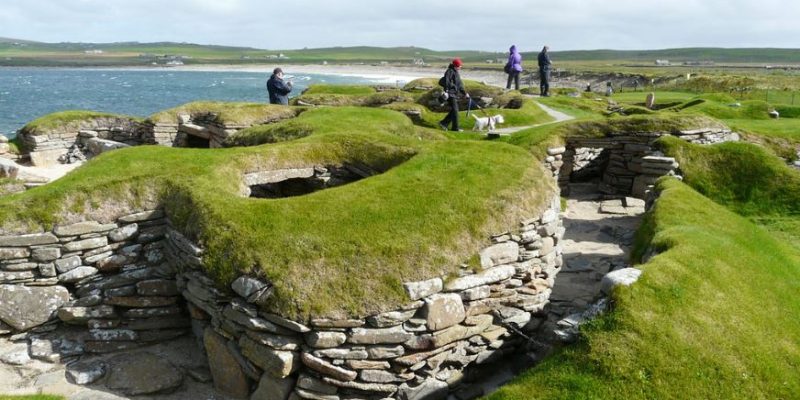
Skara Brae, Orkney, Scotland
Dating back over 5,000 years, Skara Brae predates even the pyramids of Egypt, offering an unparalleled view into Neolithic life. Situated on the Bay of Skaill in Orkney, this prehistoric village was unearthed after a fierce storm in 1850 revealed stone structures beneath the dunes.
What is particularly remarkable is the level of preservation—the stone furniture, storage shelves, and hearths remain intact, providing a glimpse into daily life that feels surprisingly familiar despite the passage of time.
Why it’s unmissable:
- Wander among ancient homes still connected by covered passageways.
- View genuine Neolithic artefacts in the visitor centre.
- Explore the breathtaking Orkney coastline, steeped in mythology and Norse heritage.
Skara Brae is a cornerstone among the historical sites in Scotland, and a visit to Orkney also offers you the chance to see the Ring of Brodgar and Maeshowe, completing a world-class ancient history circuit in one compact area.
Stonehenge, Wiltshire, England
Arguably the most renowned prehistoric monument on the planet, Stonehenge needs little introduction. Yet visiting in person brings a different appreciation to its majesty. Its scale, alignment, and the incredible effort required to construct it continue to astonish and inspire.
Despite its popularity, there remains a sense of awe when strolling the perimeter of the ancient stones, particularly at sunrise or sunset. Recent research continues to reveal new discoveries—from nearby burial mounds to a broader ritual landscape spanning Salisbury Plain.
Tips for your visit:
- Book a special access tour to step inside the stone circle itself.
- Combine your visit with Woodhenge, Durrington Walls, and Avebury for a comprehensive prehistoric experience.
- Arrive early or late to avoid crowds and soak in the atmosphere at its most enchanting.
Stonehenge is an iconic beginning—or conclusion—to any itinerary exploring ancient Britain.
Callanish Standing Stones, Isle of Lewis, Scotland
Less renowned but perhaps more evocative than Stonehenge, the Callanish Stones stand in striking formation on the Isle of Lewis in the Outer Hebrides. Their cruciform layout and weathered textures bestow a mystical aura upon the windswept landscape.
Dating to around 2900 BC, these standing stones may have served as an astronomical observatory, ritual site, or gathering place—but their true purpose remains elusive. The absence of fences and formal barriers allows visitors to wander freely among the stones, enhancing the experience.
Why visit:
- Among the most stunning and remote ancient sites in Britain.
- Visits at sunset and under moonlight are particularly enchanting.
- Combine with a journey through the Hebrides for a genuine sense of place and time.
For those seeking atmosphere over crowds, Callanish is an unforgettable highlight.
Castlerigg Stone Circle, Cumbria, England
Set in the Lake District near Keswick, Castlerigg offers one of the most picturesque ancient settings in Britain. Encircled by a ring of mountains, this Neolithic circle is simple in construction but rich in natural splendour.
What sets Castlerigg apart is its setting—watching the mist rise through the hills as you stand among the stones is an experience that beautifully intertwines landscape and legend.
Highlights include:
- Convenient access from popular Lake District routes.
- Free to visit and rarely overcrowded.
- Ideal for photography, especially at dawn or dusk.
Castlerigg often evokes a more emotional response than its larger counterparts—perhaps because it feels so timeless, yet so woven into its landscape.
Silbury Hill & Avebury, Wiltshire, England
Just down the road from Stonehenge is Avebury, home to the largest stone circle in Britain—and unlike Stonehenge, it cuts directly through the village itself. Here, you can walk among the stones, touch them, and follow trails around a prehistoric ceremonial landscape that includes Silbury Hill, West Kennet Long Barrow, and the Ridgeway trail.
Silbury Hill stands as one of the largest prehistoric mounds in Europe and still perplexes archaeologists as to its exact purpose. Nearby, the long barrow provides an eerie walk into an ancient tomb, with cool stone chambers and shafts of natural light.
Best for:
- Walking enthusiasts who relish linking multiple historic sites.
- Travellers seeking a more profound, quieter experience than at Stonehenge.
- Families and photographers looking for open access and fewer restrictions.
The entire area rewards slow exploration and lends itself beautifully to walking holidays.
Bryn Celli Ddu, Anglesey, Wales
Located in a serene field on the island of Anglesey, Bryn Celli Ddu is one of the best-preserved Neolithic burial chambers in Wales. A passage grave aligned with the rising sun on the summer solstice, it offers both scientific and spiritual intrigue.
Visitors can walk inside the mound, experiencing the cool hush and ancient craftsmanship first-hand. Unlike many other tombs, Bryn Celli Ddu retains an intimate feel and is rarely crowded.
Reasons to go:
- Free to access and surrounded by tranquil countryside.
- One of the most significant ancient sites in Wales.
- Pair with a visit to Anglesey’s beaches and nature reserves.
This site is a must-see for those crafting an offbeat itinerary in North Wales.
Roman Vindolanda, Northumberland, England
While Neolithic sites often claim the ancient spotlight, Vindolanda offers a glimpse into another aspect of Britain’s distant past—the Roman occupation. Situated just south of Hadrian’s Wall, this fort and settlement unveil daily life on the empire’s northern frontier.
The on-site museum showcases thousands of artefacts, including wooden writing tablets, leather shoes, and personal letters—offering an extraordinarily human view of Roman soldiers and families stationed here nearly two thousand years ago.
Why it’s compelling:
- Ongoing excavations reveal new discoveries each season.
- One of Europe’s best-preserved Roman military sites.
- Rich educational experience, ideal for families and history enthusiasts.
Pair it with a hike along Hadrian’s Wall for a full day of time travel.
Tips for Exploring Ancient Britain
Journeying among Britain’s ancient ruins is not merely about ticking boxes—it’s about immersion. These landscapes narrate stories in silence, waiting to be discovered by those who pause and look closer.
Here’s how to maximise your journey:
- Travel off-season: Spring and autumn offer an ideal blend of weather and tranquillity.
- Bring reliable walking shoes: Many sites are in remote or uneven terrain.
- Use a car: Some of the most compelling places are far from public transport routes.
- Read up beforehand: Understanding a site’s context can make the visit far more rewarding.
- Respect the setting: These are delicate places—avoid climbing on stones or leaving litter.
Connecting a few well-known sites with lesser-known ones adds richness and contrast to any itinerary.
Plan Your Journey with Great British Trips
If you’re eager to explore the ancient soul of Britain, Great British Trips can assist you in building a personalised itinerary that suits your pace and passions. Whether you wish to tread in the footsteps of druids, touch the walls of Iron Age homes, or gaze over landscapes where time stands still, we’ll handle the details.
From iconic circles to hidden burial chambers, we make it effortless to experience the historical heart of the UK—your way. Add destinations like Skara Brae, the Callanish Stones, or Bryn Celli Ddu to your journey, and connect the dots of Britain’s long and fascinating story.
Explore our itineraries or start crafting your own journey through the historical sites in Scotland and beyond.